|
Staff Portal |
 |
Student Portal |
 |
VLE |
 |
Remote Desktop |
 |
Careers Site |
 |
School Calendar | Term Dates |
 |
Prayer and Liturgy Calendar |
 |
ParentPay |
 |
Parents Evening Booking |
Parent Noticeboard | |
|---|---|

|
Apr 22, 2026: PSHE Review Download Attachment |
|
|
Jul 10, 2025: Measles Vaccine Information Download Attachment |
|
|
Apr 30, 2024: 'Sextortion' Response Guidance Download Attachment |
|
|
Jul 13, 2023: Letter from the Headteacher Download Attachment |

|
Mar 8, 2023: Year 13 Summer Exam Series Download Attachment |
St Julie’s Catholic High School is committed to safeguarding and promoting the welfare of children and young people and expects all staff, governors, volunteers and visitors to share this commitment
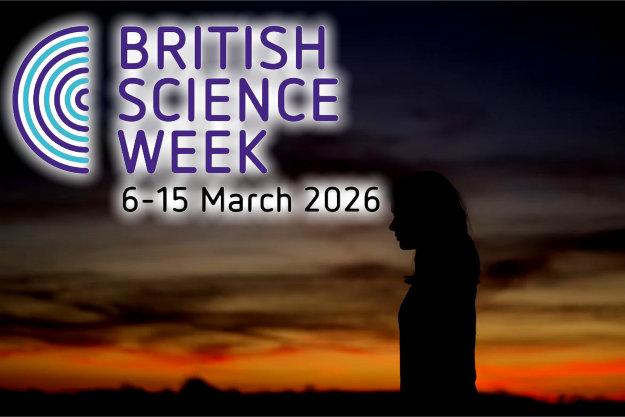
British Science Week: 6th - 15th March 2026
To celebrate British Science Week, we’re back with our annual interview. This year, we're grateful to have secured a very different type of Scientist from our previous encounters...
Q: Hello, and thank you for giving up your time to speak to us as part of our British Science Week celebrations. First of all, what type of scientist are you?
Hi and hello. You’re very welcome. Well, I’m an atmospheric scientist working as a climate modeller at the Met Office. My role involves using what you might call really powerful supercomputers to simulate the Earth's climate and understand how it may change in the future.
Q: Sounds complicated! So what does a typical day look like for you?
There isn’t really a "typical" day, which is one of the things I enjoy most, really. Some days I'm just writing code and running large climate simulations that take hours and sometimes days to process. Other days I'm analysing satellite data or I might meet with colleagues across the world to contribute to international climate assessments. This is a bit more exciting than it might first sound, as it includes work that feeds into reports for the Intergovernmental Panel on Climate Change. There's also a surprising amount of communication involved and explaining complex science clearly is a big part of the job. I spend a lot of time studying clouds, but not the digital ones.
Q: What route did you take into this career? Did you always know you wanted to do this?
Absolutely not, no! At school I took Maths, Physics and Geography A level. I chose them because I quite enjoyed them and because I’d done well in those subjects at GCSE. Then after my A levels I completed a degree in Physics, followed by a Master’s Degree in Climate Science after taking a year out (sort of a gap year) to do a bit of travelling. Many of the people I work with have PhDs now, though I wouldn’t say it's essential. If you have strong mathematical and computing skills, that’s really important. My turning point was probably a summer internship, like a work experience placement, during university. Until then, I hadn’t realised climate modelling was even a job and it just sounded really interesting. Growing up, I’d done horse riding and spent most of my weekends mucking out at a local stables, so if you’d asked me at 14 what I wanted to do, it would probably have been something to do with horses!
Q: What are the highs of the job?
Running a model successfully after weeks of problem-solving is incredibly satisfying. It feels like solving a huge puzzle and it makes all the long hours worth it when you see it all coming together. Another highlight is knowing that our work informs real-world decisions which could be anything from flood defences in the UK to international environmental agreements. It’s rewarding to know your research matters, and I work with some amazing people as well. So I'd say the people and knowing we're making a difference really matter.
Q: And the challenges?
The scale of the issue can be daunting. Climate science deals with long-term global risks, and the data can feel really heavy and I suppose, quite daunting at times. There’s also a lot of uncertainty because science works in probabilities rather than guarantees, which can be difficult to communicate publicly. Another thing which can be frustrating is that practically speaking, experiments don’t always work first time. It's not the way it's portrayed in films where there's a crisis coming, and the scientists can save everyone within ten minutes of looking at the problem. I'd say resilience is essential, and it’s important not to be too hard on yourself If you don’t get the outcomes you want immediately.
Q: What advice would you give students considering science careers?
Er, I’d definitely say keep your curiosity alive. Ask questions, even if you think they’re simple. I think this is really important. I’d also say don’t avoid choosing subjects just because they’re challenging if you enjoy them. Maths in particular opens doors to more careers than people realise. I think when me and my friends were in Sixth Form we all assumed doing Maths A level meant we'd all be Maths teachers or accountants and this isn’t the case. I think another thing to remember is there isn't one perfect path into a science career as science and scientists have different areas of expertise and focus. Many scientists take unexpected routes and have a range of different roles before they settle into the one they enjoy most.

| Headteacher: Mrs. K. McCourt | |
 |
Speke Road, Liverpool, L25 7TN |
 |
0151 428 6421 |
 |
0151 421 1399 |
 |
reception@stjulies.org.uk |
Our aim is to provide the highest quality education. School staff have a right to work without fear of harassment, intimidation or abuse. If you have a query, concern or complaint please let us know by phoning school on 0151 428 6421 or use our feedback form below.
All original content © St. Julie's Catholic High School